
"Central Kavehaz"
30891 article(s) found

Coffee in Central America introduces the name and cultivation of coffee producing areas in seven countries.
For professional baristas, please follow the Coffee Workshop (official Wechat account cafe_style) 200Coffee School the land bridge between Central America and North and South America, there are seven countries: Belize, Costa Rica, El Salvador, Guatemala, Honduras, Nicaragua and Panama. Coffee is produced in seven Central American countries, including Guatemala, Costa Rica and Honduras.
The History of Coffee Culture in Central and Northern Europe
Office Coffee Culture in Japan Coffee Culture in San Francisco Coffee Culture in Northern Europe: mild reason the European style is not as enthusiastic as the Italians, nor is it as romantic as the French. People in central and northern Europe drink coffee rationally and gently, just like their organized nationality.

Boutique coffee from Central America the first Nicaraguan coffee estate opened by Taiwanese in Central America
Professional barista communication Please follow the coffee workshop (Wechat official account cafe_style) because he likes drinking coffee and is interested in agriculture, so he bought a coffee farm; because he grows good coffee in Nicaragua, he introduces good coffee to Taiwan. The story of Anjing Manor Coffee Farm sounds incredible. Dr. Chen Ruoyu and Dr. Yang Ziqing used Taiwan's agricultural biotechnology.

Introduction to the handling of coffee beans at Aprocetu Estate Farm in the Central Valley of Costa Rica
For the exchange of professional baristas, please follow the coffee workshop (Wechat official account cafe_style) Costa Rica Aprocetu Estate Farm (honey processed beans) Costa Rica is the most stable and best quality coffee in Central America, and its production has a very long history. It was exported to Britain as early as the 1800s of the 19th century. Latitude, altitude, soil, rainfall and temperature are caused by the narrow terrain.

La Jas Manor in the Central Valley of Costa Rica
Lajas is also the first manor in Central America to start honey treatment and natural sun treatment. Tanning is a very traditional practice, which uses the least resources, but because there are too many uncontrollable factors, it is very difficult to do well. Francesca added many innovations, such as using the sugar meter (Brix meter), which is often equipped in the wine industry, to measure the sugar content of fruits and roots.

History and Flavor Characteristics of Central American and Ethiopian Summer Coffee Beans
Rose summer is a variety familiar to many coffee lovers. Both Central America and Ethiopia are planted, but do you know the difference between the summer flowers in these two regions? As a type of Arabica coffee bean, unlike the widely cultivated coffee varieties such as iron pickup and bourbon, Rosa is a native variety, that is, a descendant of wild coffee. Sometimes it is written gesha, because

Hand brewing method--detailed explanation of the whole process of central water injection, introduction of how to hand brew a cup of fine coffee
I have been using the center injection method for brewing since I came into contact with hand brewing, that is, only injecting water in the center without spreading out, and a small hole will be formed after extraction. The opposite of the central injection method is the infusion method, which injects water over the entire coffee surface. Many friends feel that the central injection method may not be able to extract completely, but my feeling is that the central injection method can extract completely, but it is the immersion method.
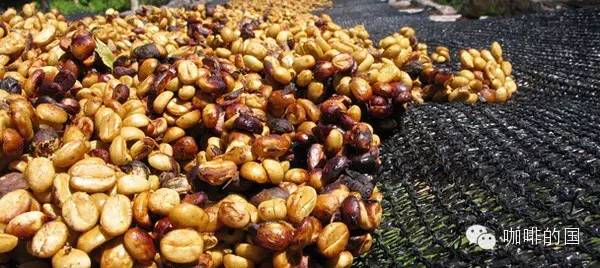
What is honey treatment? SHB Coffee treated with Red Honey at Fire Phoenix Manor in the Valley of Central Costa Rica
Honey treatment is a kind of treatment between sun treatment and water washing. It keeps the coffee clean by washing, and because it is dried in the sun together with the pulp mucosa, it greatly increases the sweetness and caramel flavor of the coffee (the sugar content of the pulp mucosa is extremely high). Honey treatment first appeared in Costa Rica in Central America, mainly because of some high elevations in Central America.

Starbucks Coffee Flavor Card Design of Mont Alto Manor in the Central Valley of Costa Rica
Professional coffee knowledge exchange more coffee bean information please pay attention to the coffee workshop (Wechat official account cafe_style) Costa Rican coffee is the most stable quality of Central American coffee, the most important is that the coffee grows in the complete shade of big trees and cool rainy night and the morning and evening temperature difference in the natural environment, coupled with rich soil and stable progress of the middle and rear treatment to make Costa Li

Introduction to Los Congo Manor, characteristics of Nicaraguan Coffee Flavor Manor in Central America
The delicate and smooth taste and balanced taste of coffee in the mouth is the most fascinating. This delicate taste can make the taste of coffee more complete and meticulous, so that the taste nerve can more fully experience the rich taste of coffee. The smooth taste can reduce the clutter caused by the rich taste and remember the different flavors more clearly.

Central European coffee is mild and rational
Not as enthusiastic as the Italians or as romantic as the French, people in central and northern Europe drink coffee rationally and gently, just like their organized nationality. European life and coffee have become almost inextricably linked, except for the unusual way of drinking coffee in Italy and France, from Austria, Switzerland, Germany to the north.

Introduction of Honey King Farm with the Best Honey treatment in the Central Valley of Costa Rica
For the exchange of professional baristas, please follow the coffee workshop (Wechat official account cafe_style) Costa Rica Brumas del Zurqui Estate Brumas Farm (Honey King) Costa Rica is the most stable and best quality coffee in Central America, and its production has a very long history. It was exported to Britain as early as the 1800s of the 19th century. Latitude and altitude due to long and narrow terrain

The Central and South American style of Nicaraguan Coffee Flavor Manor introduces the characteristics of Nicaraguan Coffee
Nicaraguan coffee belongs to Central and South American style coffee, although the acidity is not very high, but it feels refreshing. The mellow degree is also not high, but the overall feeling is just right, neither thin nor too strong. To make it easier to accept. The taste of red wine can be vaguely felt in the shallow sour taste, which is also a major feature of Nicaraguan coffee. Although unlike Kenyan coffee,

Central European coffee mild and rational coffee culture
Not as enthusiastic as the Italians or as romantic as the French, people in central and northern Europe drink coffee rationally and gently, just like their organized nationality. European life and coffee have become almost inextricably linked, except for the unusual way of drinking coffee in Italy and France, from Austria, Switzerland, Germany to the north.

Fine Coffee introduced in the Coffee production area in the Central Mountain area of Costa Rica
Coffee was introduced into Costa Rica from Cuba in 1729. Today, its coffee industry is one of the well-organized industries in the world, with a yield of 1700 kg per hectare. Costa Rica has only 3.5 million people but 400m coffee trees, and coffee exports account for 25 per cent of the country's total exports. The volcanic soil of Costa Rica is very fertile and well drained, especially in the central part.

Central European coffee mild rational boutique coffee culture
Not as enthusiastic as the Italians or as romantic as the French, people in central and northern Europe drink coffee rationally and gently, just like their organized nationality. European life and coffee have become almost inextricably linked, except for the unusual way of drinking coffee in Italy and France, from Austria, Switzerland, Germany to the north.

Red Honey of Fire Phoenix Manor in the Valley of Central Costa Rica treats Coffee Flavor
Located in the fertile hills of the Poas volcano in the central valley of Costa Rica, Fenghuang Manor is the first producer in Central and South America to produce honey-treated and sun-cured coffee. It is a completely 100% organically grown coffee manor. The owner believes that organic farming is a better choice for environmental maintenance and family health, even in the face of many technical and organizational
Costa Rican coffee flavor Central and South American coffee characteristics Tara Pearl Diamond Villa washing SHB card
Costa Rican coffee plants were imported from Cuba in 1779 and exported for the first time in 1820. There are now about 32000 coffee farmers, with an average of less than 10000 yuan per farmer. Costa Rica has a population of 410 million (2006), an active coffee planting area of 82500 square meters, an annual output of 1.7 million bags (60kgs per bag), and an annual consumption of 38 million bags in China.

El Salvador, Northern Central America Coffee Region Manor Flavor Taste Introduction
El Salvador is located in the north of Central America and is the most densely populated country in Central America. Honduras borders the country to the north, the Pacific Ocean to the south and Guatemala to the northwest. The national economy is dominated by agriculture, with coffee and cotton as the main crops. El Salvador is also one of the birthplaces of ancient Mayan culture, not only with a distant culture, but also with volcanoes, plateau lakes and the Pacific coast.